
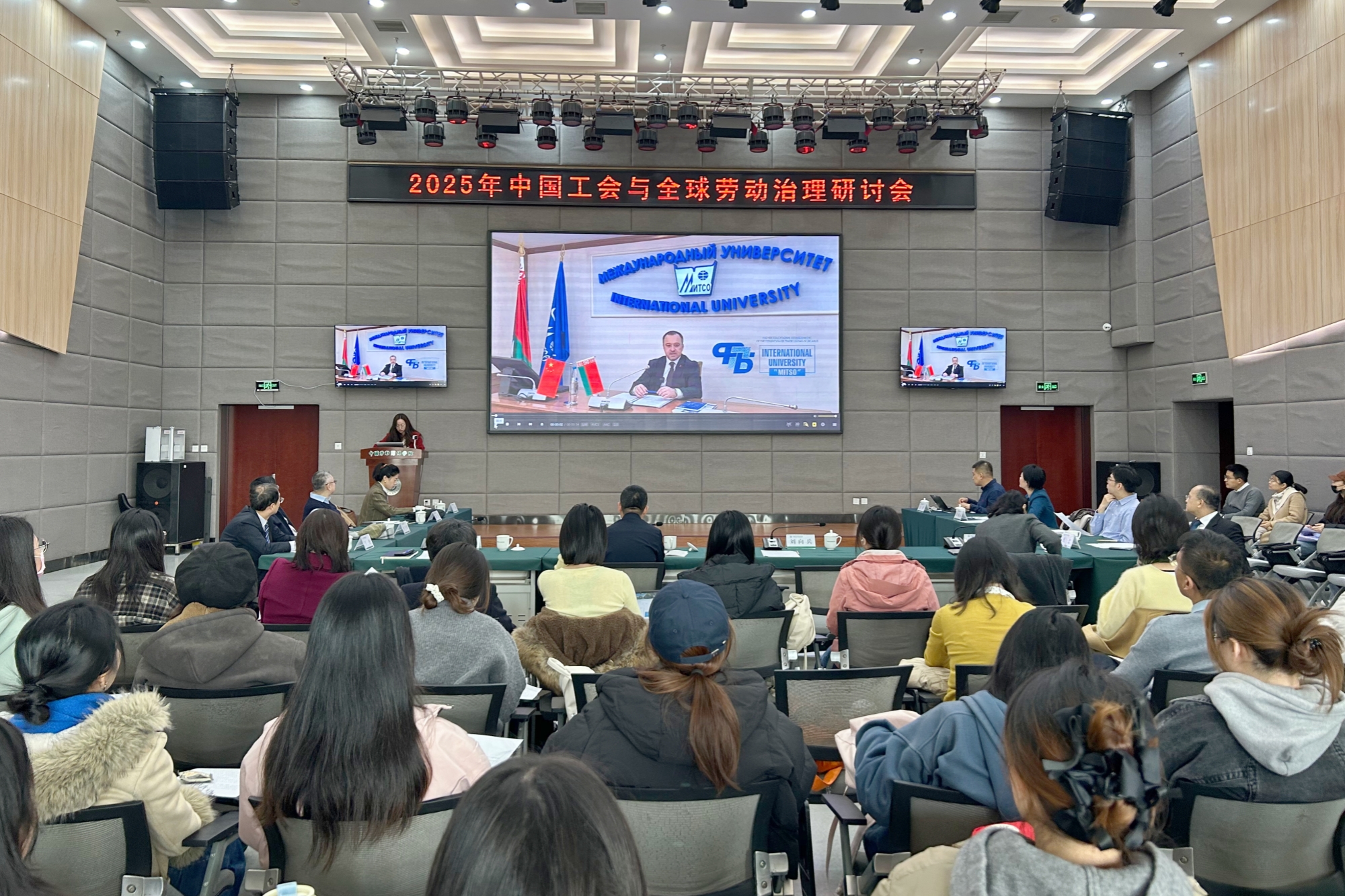
On the morning of November 15, the 2025 International Symposium on Chinese Trade Unions and Global Labor Governance was held in Room 909, Zhiyuan Building, Beijing Campus of CULR. Liu Xiangbing, Secretary of CULR Party Committee, Li Ke, Member of CULR Party Committee Standing Committee and Vice President, Li Yang, Level I Bureau Rank Official of the Research Office of the All-China Federation of Trade Unions (ACFTU), and Zheng Haixin, Level II Bureau Rank Official of the International Liaison Department of the ACFTU attended the event. More than 60 experts, scholars, faculty and student representatives from renowned institutions participated, including Columbia University, International University "MITSO", Fudan University, Renmin University of China, Beihang University, the International Labor Organization (ILO) Beijing Office, Volkswagen Group, as well as CULR. The opening ceremony of the symposium was presided over by Li Ke.
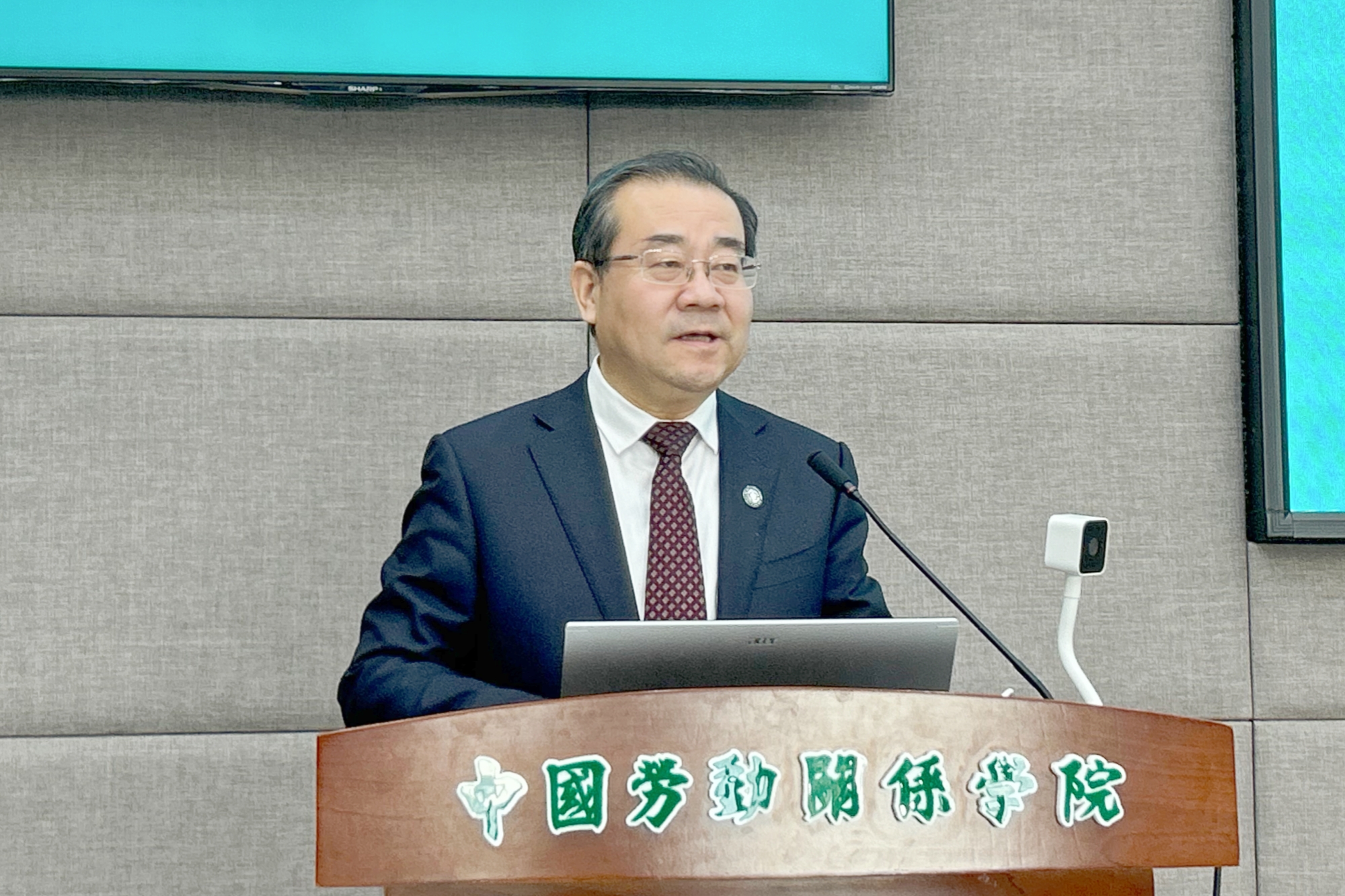
In his address, Liu Xiangbing pointed out that the world is undergoing profound changes unseen in a century, and the global labor landscape is facing unprecedented new opportunities and challenges. As the world's largest developing country, China has made remarkable achievements in recent years in trade union participation in global labor governance, protection of workers' rights and interests, and promotion of common prosperity. The practices of Chinese trade unions have contributed a "China Solution" to global labor governance. Chinese trade unions also stand ready to strengthen exchanges and deepen cooperation with the international community to jointly explore paths to address common issues in the global labor field.
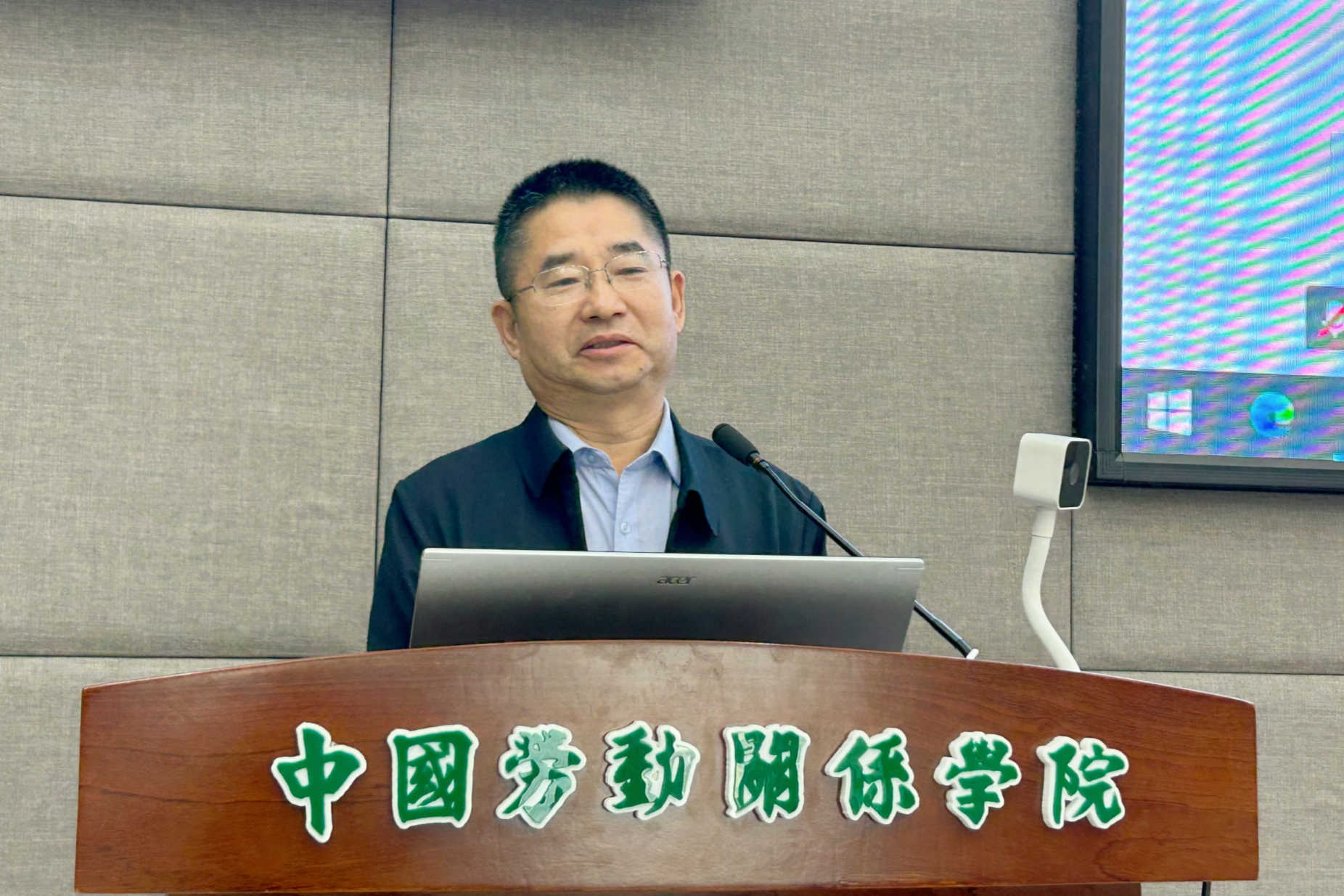
In his concluding remarks, Li Yang noted that the research results presented by the experts demonstrated professional depth and practical orientation, effectively responding to the dual challenges brought by globalization and artificial intelligence. He stressed that future research should focus on two key areas: first, accelerating the development of an independent knowledge system for trade union work with Chinese characteristics to enhance China's capacity for rule-making and agenda-setting in global labor governance; second, building a high-quality, professional workforce for trade union work to improve the international communication effectiveness of China's stories and the stories of the working class.
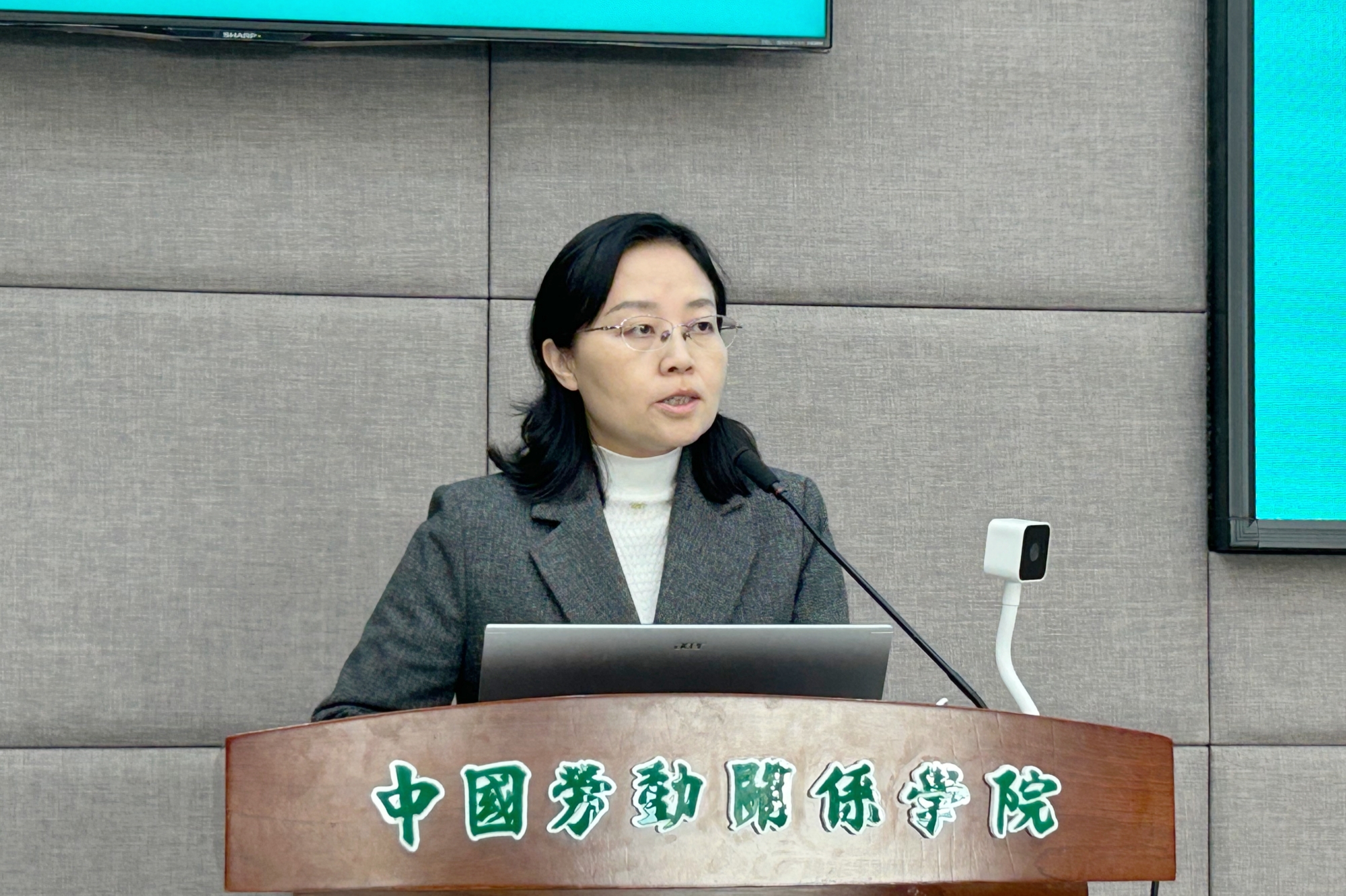
Zheng Haixin stated in the speech that strengthening global labor governance and resolving global issues in the labor field represent a major task shared by trade unions around the world. It is of far-reaching significance that CULR invited representatives of international organizations, scholars from home and abroad, and senior human resources experts from multinational corporations to discuss solutions to global issues in the labor area.
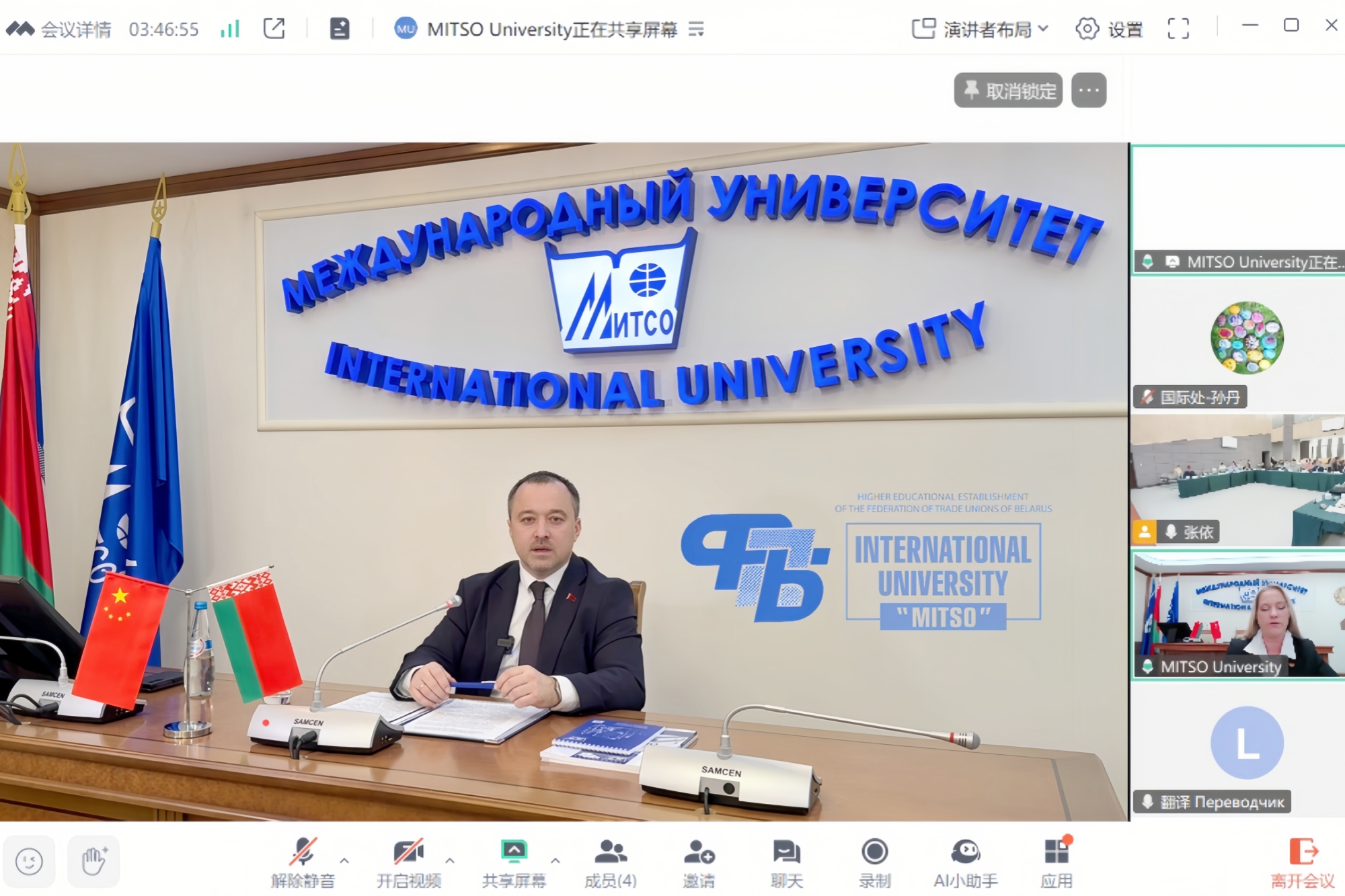
In his address, the International University "MITSO" Chancellor Vladimir Pozdnyakov pointed out that the international community should not only have a clear understanding of new challenges in labor and social protection, but also jointly explore responses and work out practical solutions.
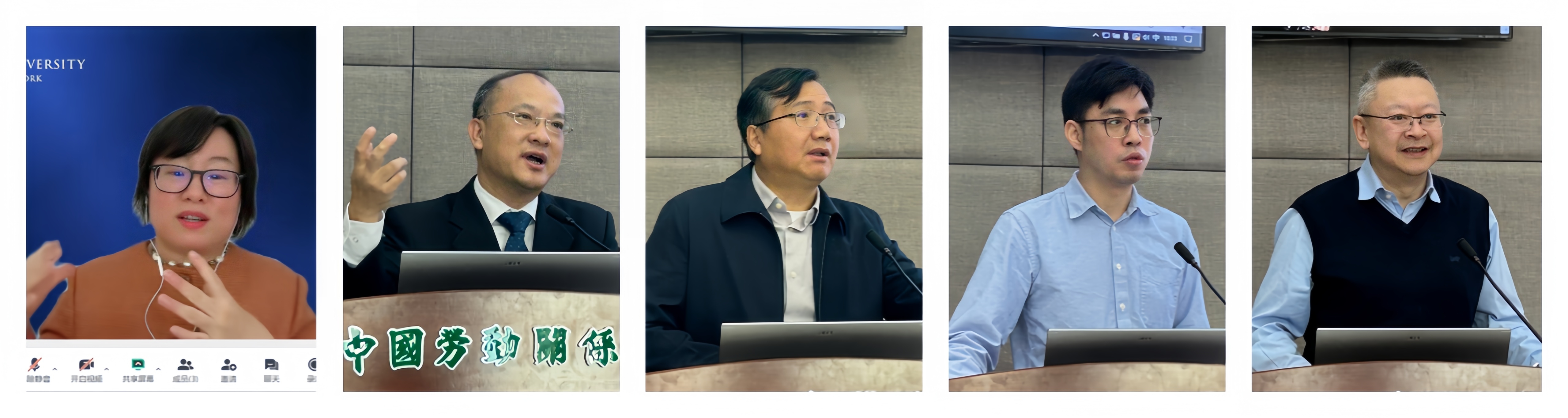
During the discussion session, the first panel featured five speakers on the international labor market and transformation of trade union organizations in the AI era. Professor Gao Qin, Associate Dean of the School of Social Work at Columbia University, analyzed and explored the impact of AI on workplace functions in social work. Professor Zhao Zhong, Dean of the School of Labor and Human Resources at Renmin University of China, pointed out that the development of AI and its platforms may lead to market monopolies, weaken workers' bargaining power, and that technological progress may exert uneven impacts across different groups. Professor Long Weiqiu, Dean of the Institute for Advanced Studies in Humanities and Social Sciences at Beihang University, noted that new forms of employment challenge traditional labor relations and social security systems, and put forward corresponding policy suggestions. Tu Wei, a labor law researcher at the ILO Beijing Office, analyzed the responses of Chinese trade unions to evolving trends in labor provisions and the due role of the ILO. Chen Tong, Senior Director of Volkswagen Group China, shared cases of the establishment and democratic management of Volkswagen's enterprise trade union in China, and discussed challenges facing global labor governance.
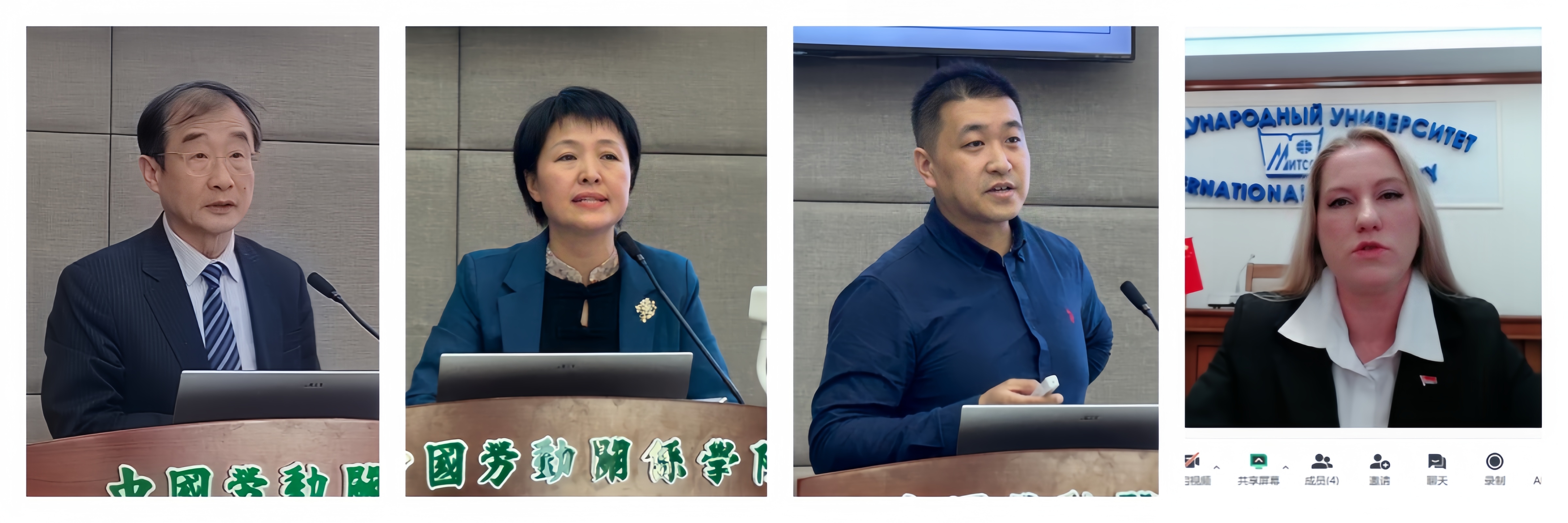
In the second panel, four experts delivered speeches on trade union research, analysis and practical experience. Professor Ding Chun, Director of the Center for European Studies at Fudan University, put forward an optimal plan to reduce the share of pension expenditure while ensuring the best effect of social protection during structural reform. Professor Xu Yanli, Director of the Office of International Exchange and Cooperation of CULR, analyzed the development trends of the international trade union movement in the future. Associate Professor Meng Quan from the School of Labor Relations and Human Resources of CULR stated that China will play an important role in global trade union governance. Associate Professor Irina Alexeyevna Komotskaya, Head of the Institute of Training and Retraining at the International University "MITSO", explored the future development and impact of flexible employment forms in Belarus.
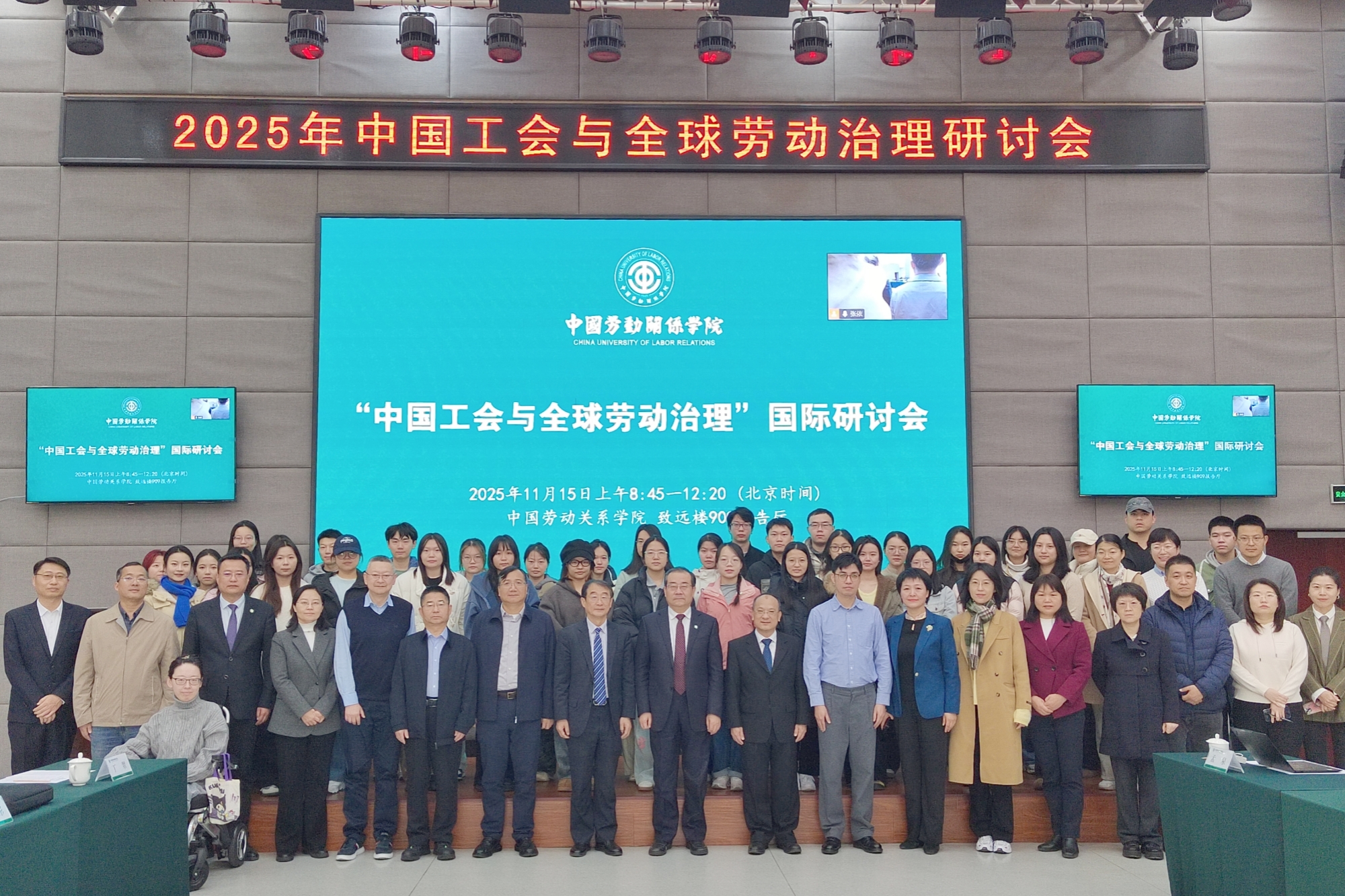
The symposium aimed to study and implement the guiding principles of the Fourth Plenary Session of the 20th Central Committee of the Communist Party of China, actively respond to new challenges and opportunities in the global labor sector, and build a high-level exchange platform. It will promote in-depth exchanges and cooperation between Chinese and foreign experts in trade union and labor governance on key issues, thus further enhancing CULR's international academic influence in trade union and labor studies.
(Office of International Exchange and Cooperation)